
So, I get some version of this question almost every week: "What's the difference between Stadium, Proctor, and Old Town? Aren't they all just North Tacoma?" Sort of. And also, not really.
North Tacoma isn't one neighborhood. It's a handful of distinct pockets that happen to share a zip code and a whole lot of tree canopy. Buyers who are new to the area tend to lump it all together, and then they show up for a showing in Stadium expecting the same feel as Proctor, and I can watch the confusion happen in real time. They're different. Genuinely different, in ways that matter for your day-to-day life once you own the house.
I've been selling real estate in Pierce County for over 15 years, and North Tacoma is one of those areas that just keeps coming up. Buyers ask about it because it's walkable, because the homes have character you can't replicate with new construction, and because Point Defiance Park is sitting right there anchoring the whole peninsula. Honestly, I get why people fall for it. I just want you to fall for the right part of it, for the right reasons.
So let's break it down. Stadium District, Proctor, Old Town, and the park that ties them all together. Real numbers, real history, no fluff.
What Makes Stadium District Different From Other Tacoma Neighborhoods?
Stadium District takes its name from Stadium High School, and if you've ever driven up North E Street and done a double take at a castle-looking building with turrets, that's it. It was originally built in 1891 as a hotel, and after a fire in 1898, it sat unfinished for years before the school district converted it into a high school, which reopened in 1906. It's listed on the National Register of Historic Places, and if the building looks familiar for another reason, that's because it played the fictional Padua High School in "10 Things I Hate About You." I still get a kick out of showing buyers where that was filmed.
Beyond the school itself, Stadium District is defined by tree-lined streets, sidewalks that actually get used, and a genuine walkability that's rare for Tacoma. It's got strong transit access too, with the Stadium District Station connecting residents to the rest of the city without needing a car for every errand.
The businesses here have staying power. Ranko's Pharmacy has been open since 1935. Parkway Tavern, also 1935. Frisko Freeze, the drive-in burger spot everyone in Tacoma has an opinion about, opened in 1950 and hasn't really changed since. There's something reassuring about a neighborhood where the businesses have been around for generations instead of turning over every few years.
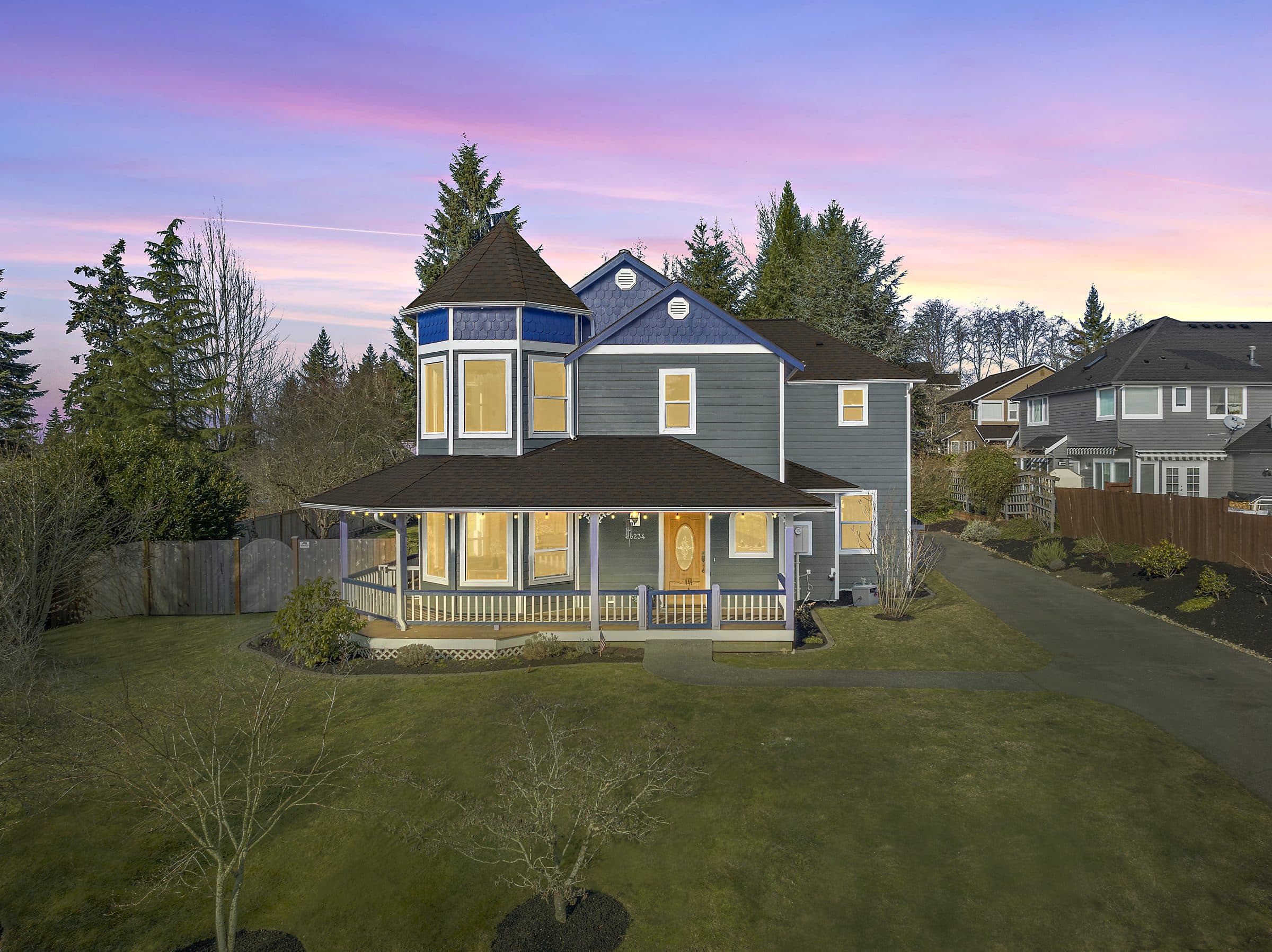
Housing-wise, Stadium is mostly historic single-family homes, a lot of them built in the early 1900s through the 1920s and 30s. You'll see a mix of Craftsman, Tudor, and larger period homes, many with the kind of detailing (built-ins, original woodwork, leaded glass) that you just don't get in new construction. Some of these homes also have views of Commencement Bay, and that view is a real price driver.
Speaking of price: the median home price in Stadium District is currently around $1,250,000, the highest of the three North Tacoma neighborhoods I'm covering here. Between the historic architecture, the walkability, and the water views on some streets, it's the priciest slice of North Tacoma, and buyers should go in with that expectation.
What's the Proctor District Like for Home Buyers?
Proctor is one of Tacoma's oldest business districts, centered at N. 26th and Proctor Street, and it has a genuine "urban village" feel that a lot of buyers are specifically searching for. You can park once and spend your whole Saturday there.
Speaking of Saturdays, the Proctor Farmers Market runs Saturdays from 9am to 2pm, March through December. That's a long season compared to most farmers markets in the area, and it gives the district a steady rhythm of foot traffic almost year-round.
The Blue Mouse Theatre is the anchor I point out to almost every buyer. Built in 1923, it's the oldest continuously operating movie theater in Washington State. The marquee mice out front were an early piece from glass artist Dale Chihuly, long before he became the name everyone in the Pacific Northwest associates with glass art. It's a small detail, but it tells you something about how long Proctor has been a gathering spot.
Shopping-wise, you've got Pacific Northwest Shop, Proctor Mercantile, Compass Rose, and Culpepper Books, among others. These are independent shops, not chains, and that independent character is a big part of what draws people to live nearby.
Housing in Proctor is a mix. You'll find bungalows, some larger historic homes, and a fair number of updated properties closer to the business district itself, plus more traditional single-family blocks as you move outward. The median home price sits around $741,000, which is meaningfully lower than Stadium but still reflects the demand for this kind of walkable, amenity-rich neighborhood.
One more thing worth knowing: the Wheelock Branch library, right in Proctor, is the busiest branch in the entire Tacoma library system. If you're a reader, or you've got kids who are, that's a nice amenity to have within walking distance.
What Should Buyers Know About Old Town Tacoma?
Old Town is where Tacoma actually started. Job Carr built his cabin here in 1865, and that settlement is generally considered the origin point of the city. If you like history, this is the neighborhood where you can feel it in the streets themselves.
St. Peter's Church is the oldest existing building in Tacoma, and Slavonian Hall is listed on the National Historic Register. These aren't just old buildings for the sake of being old; they're tied to the immigrant and maritime history that shaped this part of the city.
The Old Town Dock reopened in 2013 after renovations, and it's one of the best pieces of public waterfront access in North Tacoma. You can walk out over the water, fish, or just stand there and look at Commencement Bay without needing to own waterfront property to do it.
Compared to Stadium and Proctor, Old Town is more residential and less retail-dense. There isn't a concentrated commercial strip the way there is in Proctor. It's quieter, more neighborhood-focused, with waterfront access as the defining amenity rather than a business district. The housing stock includes a mix of older homes from Tacoma's earliest development along with newer infill construction closer to the water. If proximity to the water and a slower pace matter more to you than walkable shopping, Old Town is worth a serious look.
What About Point Defiance Park?
You can't talk about North Tacoma without talking about Point Defiance. It's the anchor for the entire peninsula, and it's one of the reasons buyers keep circling back to this part of the city.
The park covers 760 acres, and roughly 400 of those acres are old-growth forest, which is genuinely rare to have this close to a major urban center. It draws more than 3.1 million visitors a year, so it's not some quiet secret; it's a real regional destination.
Point Defiance Zoo & Aquarium sits on 29 acres within the park and is the only combined zoo and aquarium in the Pacific Northwest. Five Mile Drive loops through the park and gives you water views, forest, and beach access without ever leaving your car if that's the day you're having. Owen Beach is the go-to spot for walking the shoreline or just watching the ferries go by. Fort Nisqually Living History Museum sits inside the park too, giving a look at Puget Sound's fur trade era. There's also an off-leash dog area and formal gardens scattered throughout.
For buyers, proximity to Point Defiance isn't just a nice-to-have. It's genuinely part of the daily lifestyle for a lot of my North Tacoma clients. Morning walks before work, weekend trips to the zoo with the grandkids, a beach day that doesn't require a ferry reservation. Homes closer to the park tend to hold their value well, and it's one of the amenities buyers mention most often when I ask what sold them on the area.
What's the Housing Market Like in North Tacoma?
Numbers first, like always.
Across Tacoma's North End generally, the median home price is running somewhere between $675,000 and $740,000, down about 1.5% year over year. That's a slight cooling, not a crash, and it's worth keeping in perspective given how much this area has appreciated over the last several years.
Broken down by neighborhood, Stadium District sits at the top with a median around $1,250,000, driven largely by the historic architecture and the Commencement Bay views on certain streets. Proctor is more moderate at around $741,000, reflecting its mix of housing types and its slightly less waterfront-driven price structure.
What really stands out to me is how fast homes move here. Properties in North Tacoma are typically going pending in about 6 to 13 days, and well-priced listings are regularly drawing 3 to 6 offers. That's a tight market. If you're a buyer, you need to be ready to move quickly, and you need your financing lined up before you start touring, not after you find the house.
Inventory is tight across the board, which is part of why competition stays high even as prices soften slightly. Historic homes, especially pre-1930s Craftsman and Tudor styles, tend to command a premium over more generic housing stock, simply because there's a limited supply of them and buyers specifically seek them out.
One honest note on older homes: budget for a thorough inspection, and expect it to turn something up. Knob-and-tube wiring, aging plumbing, foundation settling, these are common in homes built 80 to 100+ years ago, and they're not deal-breakers, but they are things you want documented before you close, not discovered after. I always walk my buyers through what an inspection on a historic home typically finds so nothing catches them off guard.
How's the Commute From North Tacoma?
North Tacoma's location is one of its bigger draws for people who need to get around the South Sound regularly.
Getting to downtown Tacoma takes under 15 minutes from most of North Tacoma, which makes it an easy option if you work downtown or just want quick access to the restaurants and businesses there.
Seattle is a different story. Depending on where in North Tacoma you're starting and what time you're driving, expect 45 minutes to over an hour via I-5. That's manageable for a hybrid work schedule, tougher for a daily five-day commute, and something every Seattle-bound buyer should test-drive at actual rush hour before committing.
Joint Base Lewis-McChord is roughly 9 miles away, which keeps North Tacoma reasonably accessible for military-connected buyers, even though it's not as close as some other Pierce County communities.
For context, Pierce County's average commute time overall is around 26 minutes, so North Tacoma's downtown proximity puts a lot of residents well under that average, even with the longer Seattle drive weighing on the numbers for some households.
Transit options include local bus service connecting North Tacoma to downtown and beyond, plus the Stadium District Station I mentioned earlier, which gives Stadium residents a real transit option instead of relying entirely on a car.
What Are the Schools Serving North Tacoma?
North Tacoma is served by Tacoma Public Schools. Washington Elementary and Mason Middle School serve the Proctor area specifically. For grades 9 through 12, students in North Tacoma are generally served by Stadium High School or Silas High School.
As with any home search, I recommend buyers verify the exact school assignment for a specific property directly with Tacoma Public Schools, since boundaries can shift and don't always line up neatly with neighborhood lines. I check this on every transaction so there are no surprises after closing.
What Are the Pros and Cons of North Tacoma?
I give every buyer the honest version. Here it is.
The Pros
Walkability. Proctor and Stadium District both offer genuine walk-to-everything living, which is hard to find in most of Pierce County.
Character. Historic homes with real architectural detail: Craftsman bungalows, Tudor construction, original woodwork. You're not getting a cookie-cutter floor plan.
Point Defiance access. Having 760 acres of park, a zoo and aquarium, and waterfront beach access minutes from home is a legitimate lifestyle amenity, not just a nice view on a listing photo.
Dining and culture. Between Proctor's independent shops, the Blue Mouse Theatre, and Stadium District's long-standing local businesses, there's a lot of character packed into a small area.
Strong resale values. Historic homes in North Tacoma have consistently held and appreciated in value, which matters if you're thinking beyond just your first few years of ownership.
Closest to Seattle. Of the Pierce County communities I typically show, North Tacoma tends to offer the shortest realistic commute to Seattle, even though it's still a real drive.
The Cons
Higher prices. North Tacoma, especially Stadium District, runs well above the median for Pierce County overall. You're paying for location, walkability, and character.
Older homes mean more maintenance. Charming built-ins and original hardwood come with the reality of aging systems. Budget for inspections and ongoing upkeep, especially on pre-1930s homes.
Parking. Both Stadium District and Proctor can get tight on parking, especially near the business districts on weekends or during events.
I-5 congestion. If your job is in Seattle, the commute is real and it varies a lot depending on time of day. Test it before you commit.
What Community Resources Should North Tacoma Buyers Know About?
Here are the resources I point my North Tacoma buyers toward:
- City of Tacoma: (253) 591-5000, cityoftacoma.org
- North End Neighborhood Council: nenc.org
- Wheelock Branch Library (Proctor): (253) 292-2001, busiest branch in the Tacoma library system
- Tacoma Public Schools: (253) 571-1000, tacomaschools.org
- Point Defiance Zoo & Aquarium: (253) 404-3800, pdza.org
- Proctor Farmers Market: theproctordistrict.com, Saturdays 9am-2pm, March through December
- Metro Parks Tacoma: (253) 305-1000, metroparkstacoma.org
Is North Tacoma Right for You?
North Tacoma isn't a single answer. It's three distinct neighborhoods with three distinct personalities, and the right one for you depends on what you actually want your daily life to look like. Stadium District if you want historic architecture, water views, and the most walkable, transit-connected option, at the highest price point of the three. Proctor if you want that same walkability with a more moderate price and an honest-to-goodness urban village feel. Old Town if waterfront access and a quieter, more residential pace matter more to you than a retail strip out your front door.
What ties all three together is Point Defiance, and I think that's part of why buyers who fall in love with North Tacoma tend to stay for the long haul. You're not just buying a house here. You're buying into a peninsula with 760 acres of park, a working waterfront, and a genuine sense of history running through the streets.
If you're weighing North Tacoma against other parts of Pierce County, I'm happy to walk you through it. I'll tell you honestly which neighborhood fits your budget and your lifestyle, not just the one with the prettiest listing photos. Take the free assessment below, or give me a call directly. Fifteen minutes, no pitch, no pressure. Just an honest conversation about what buying in North Tacoma actually looks like right now.
Becca Pitts is a licensed real estate agent with eXp Realty LLC, SRES certified, specializing in Pierce County WA real estate. With 15+ years of experience and 270+ closings, she brings a detail-oriented, people-first approach to helping buyers find the right home in the right neighborhood.
Rebecca Pitts is a licensed real estate broker in Washington State, affiliated with eXp Realty LLC. License #107351. eXp Realty LLC is a licensed Washington real estate firm. Equal Housing Opportunity.